The Change Curve is a popular and powerful model used to understand the stages of personal transition. It helps you to think about how people might respond to change.
Experience, patterns of behaviour and current emotional state underpins how people will respond to change. So, understanding the differences in behaviours and emotional responses can help leaders and can help facilitators to respond appropriately by looking to get the best from people.
It’s important to remember that these are ‘normal’ and ‘natural’ responses to change.
Listen to Joshua Freedman talking about the emotions of change.
Change Transitions
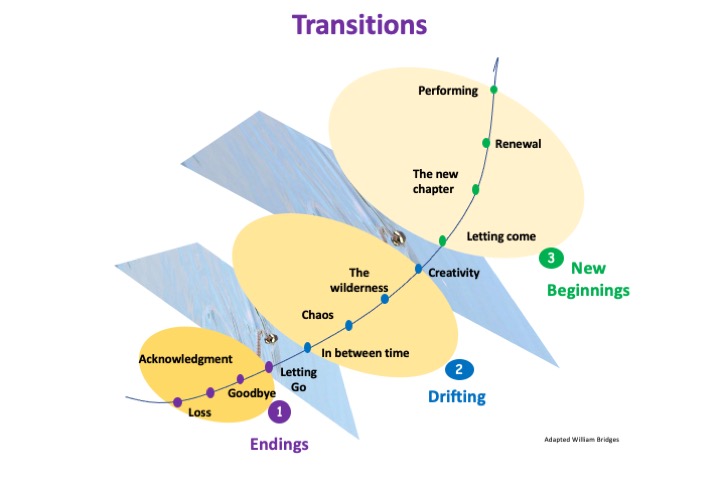
William Bridges created a model called Change Transitions, connecting with the idea that change was not a one-off event. This feels important in our Personal Leadership work as we understand and reflect on our own responses to change.
Connecting to Change
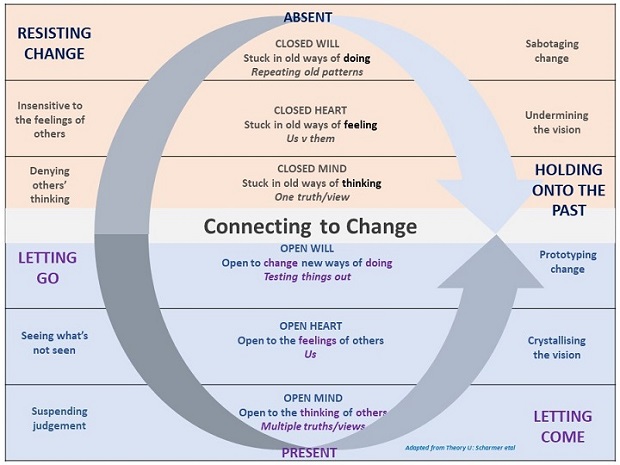
The facilitator almost always has a role to help others connect to the change they or their organisation desires. This model can help you and those you are facilitating to ‘see’ where they are and where the want to be.